 Don't Care
IN DEPTH · SAVONA
Every child develops coordination at their own pace, and the pace varies a great deal from child to child. WHO guidelines recommend daily movement for children and teenagers. We offer it through movement games designed for the child’s age: running, jumping, throwing, catching, balancing. If difficulties are marked or long-lasting, the paediatrician is the first point of reference.
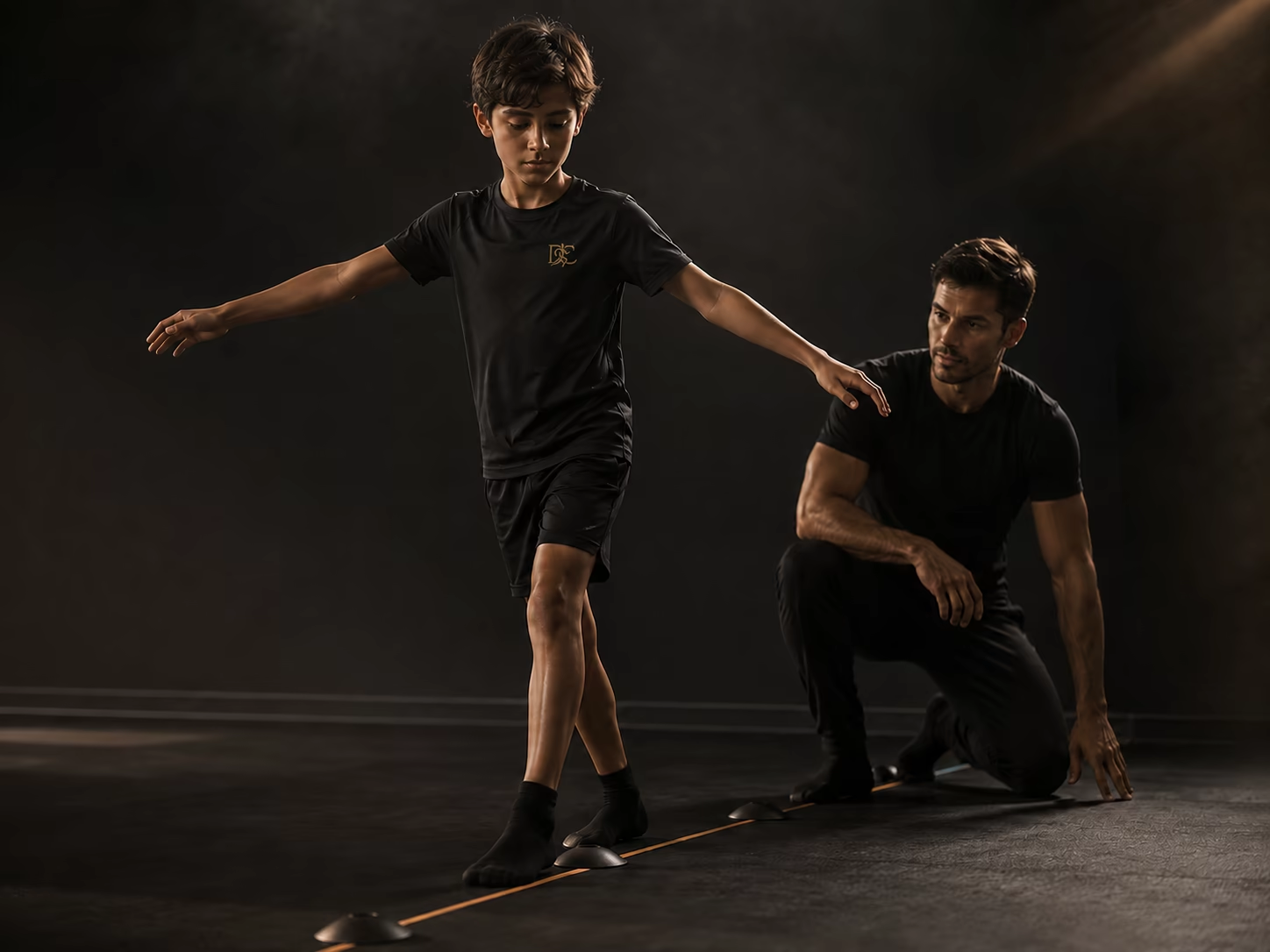
Signs of a coordination disorder can be present early, but children develop at very different rates: for this reason, the NHS explains, a definite diagnosis does not usually happen before age 5. There is no need to wait until then to talk to the paediatrician if you notice difficulties.
The World Health Organization’s 2020 guidelines recommend that children and teenagers aged 5 to 17 do at least an average of 60 minutes a day of moderate-to-vigorous physical activity, with vigorous activities and muscle- and bone-strengthening activities on at least three days a week, and that they limit screen time.
When difficulties are marked and long-lasting, it may be developmental coordination disorder, also called dyspraxia. The 2019 international recommendations report widely varying estimates, the most cited being 5–6 children in 100. Diagnosis is for health professionals, not for us.
The children and teenagers path builds solid movement foundations while the body changes: coordination, posture, foot strike and breathing grow together. For teenagers who already compete in a sport, there is also the athletes path.
We do not diagnose: if a coordination disorder needs assessing, the paediatrician and child-development specialists do that. Talk to them, or to the school, if:
The pace of development varies a great deal from child to child, and we cannot tell from here whether it is a phase. If the difficulties are marked, last a long time or weigh on school and play, talk to the paediatrician. Our work on movement can sit alongside their advice.
One sport is a great base, but it often repeats the same movements. Variety helps: running games, jumps, throws, balance, climbing. That is why the path also works on patterns the child’s sport uses little.
The children and teenagers path welcomes different ages, and the work adapts: with the youngest it is almost all play. Contact us with your child’s age and we will tell you how we organise the sessions.
Our work is movement training, not therapy. If there is a diagnosis, the reference remains the plan set by the specialists: we can talk it through with the family to understand whether and how movement at the studio can sit alongside it.
The general information on this page comes from public health bodies and scientific literature, listed below. It does not replace your doctor’s advice.